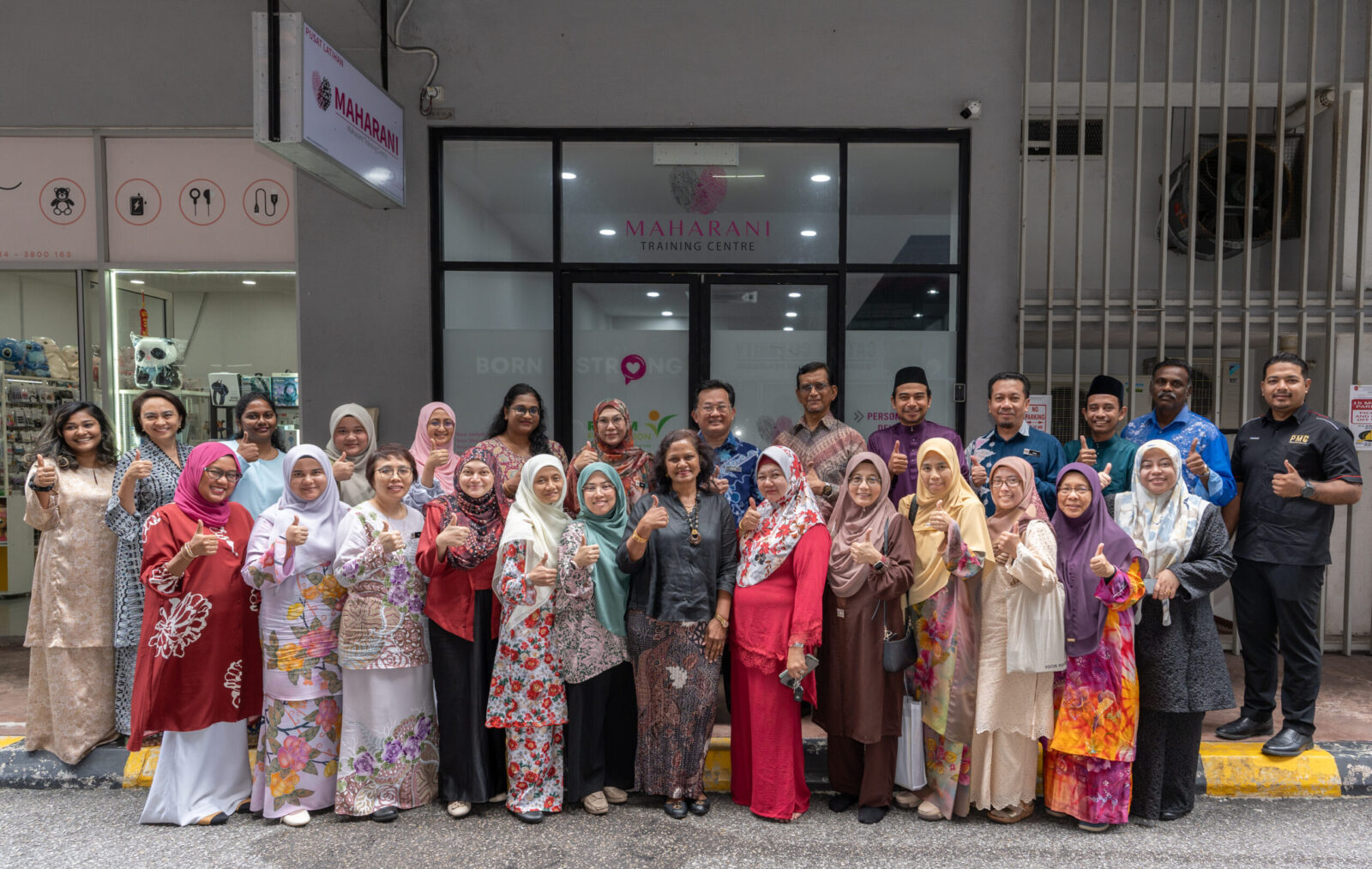
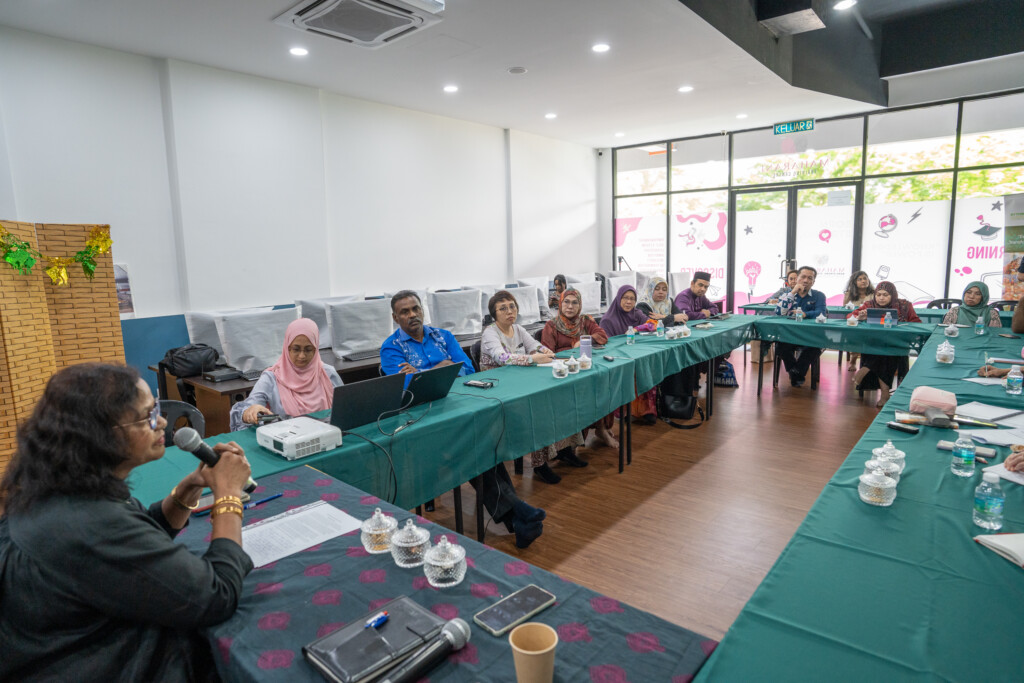
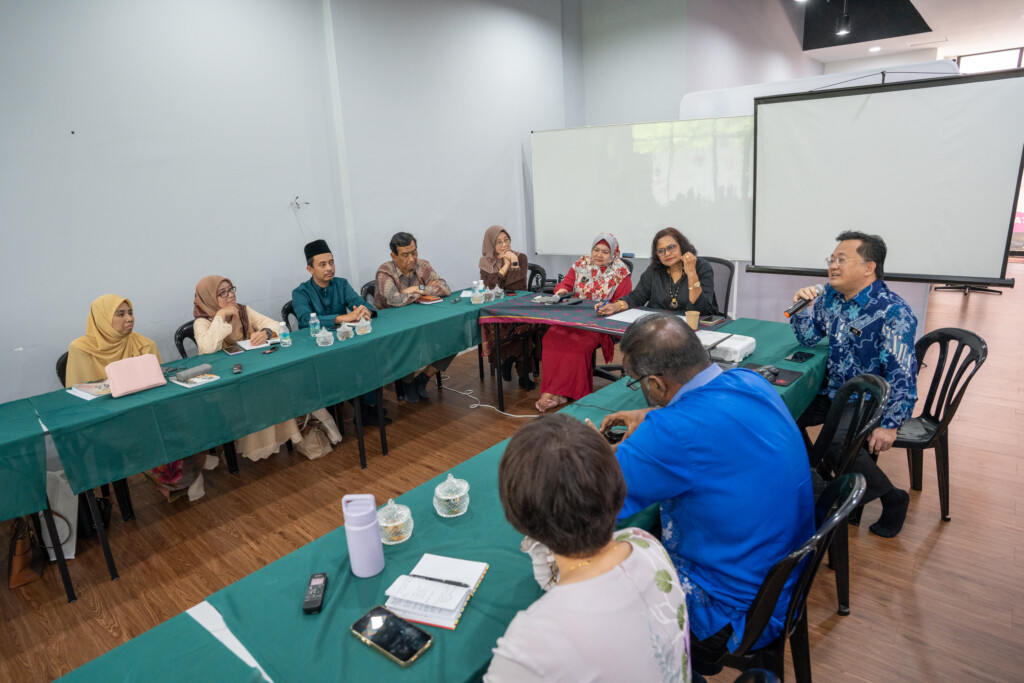
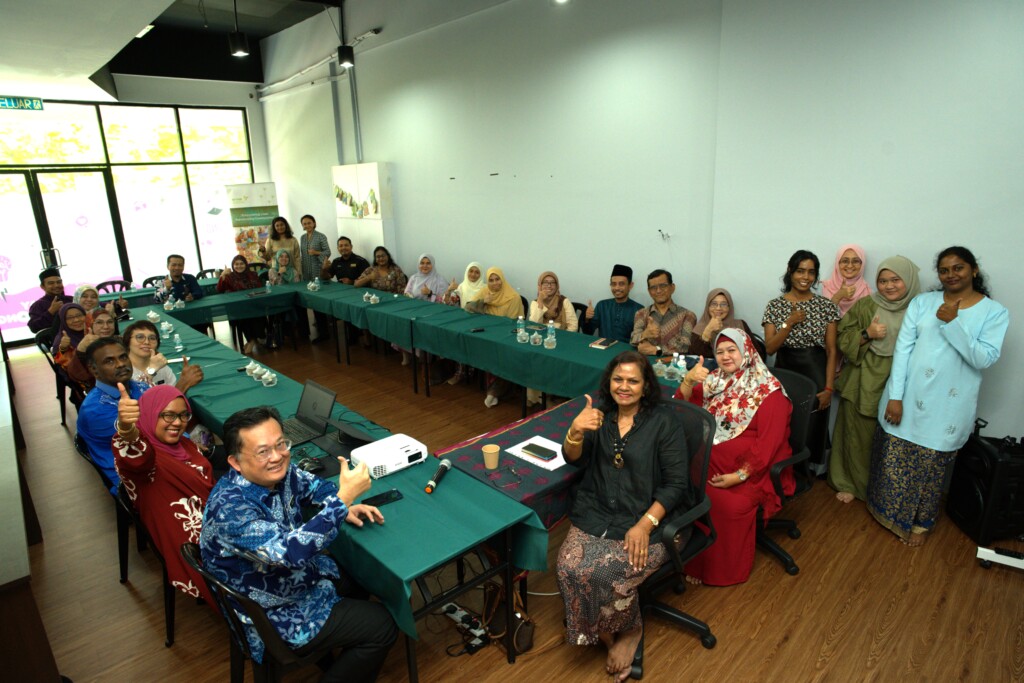
The Maharani Learning Lab (MLL) in Damansara Damai buzzed with energy as key stakeholders came together to shape the future of the Maharani Program. Hosted by Ms. Santhi Periasamy, Head of RYTHM Foundation (RF), the roundtable discussion marked a pivotal moment in the program’s evolution. The day blended meaningful dialogue with the warmth of an Eid-themed vegetarian luncheon, a true reflection of RF’s unwavering commitment to empowering young women across Malaysia.
In attendance were the Maharani School Program (MSP) coordinator teachers, representatives from schools under the MLL, and strategic partners, including Associate Professor Dr. Suhaidah Tahir, Puan Huwaida, and Encik Khairul from PINTAR Foundation, as well as Dr. Azlee AB Rahim from the Petaling Utama District Education Office.
Santhi opened the session by sharing RF’s vision – scaling the Maharani Program to the national level to create even greater impact. Her warm welcome set the tone for an afternoon of open conversations, where every insight was seen as a valuable building block for the future.

A Treasure Trove of Participant Insights
Central to the discussion were three critical themes – aligning the Maharani Program with Malaysia’s national education policies, addressing existing gaps in the education system for young women, and establishing clear ways to measure the program’s success. This framework sparked a lively and thoughtful exchange among participants.
Real-world experiences were shared generously. Stakeholders spoke about the developmental gaps between male and female adolescents, often influenced by socio-economic factors, rural-urban divides, and emotional well-being. Many highlighted how the Maharani Program’s safe, girls-only spaces allowed participants to thrive, boosting their confidence and voice in ways that traditional school environments sometimes do not.
There was strong support for integrating modules that build not only academic knowledge (IQ) but also emotional intelligence (EQ) and social awareness (SQ). Some participants suggested eventually expanding the program to include adolescent boys, promoting future gender collaboration while maintaining a strong focus on girls’ development.
Another important theme that emerged was the vital role of community support. Clear communication with parents and guardians, empowering teachers with certifications and ongoing training, and strengthening relationships with Parent-Teacher Associations were seen as crucial steps to keep students engaged and motivated throughout the program.
Visibility of the Maharani Program was also discussed, with participants proposing creative ideas such as strategic banner placements and information booths near popular student areas to reach more families effectively.
In her closing remarks, Santhi stressed the importance of setting clear success metrics to monitor the Maharani Program’s long-term impact. She noted that real, measurable outcomes are often visible within six months to a year and a half after the program’s completion. These benchmarks will be crucial for maintaining transparency with stakeholders and guiding future improvements.
Looking ahead, participants were excited about the possibilities for post-program initiatives, including creating a Maharani alumni network and a sustainable mentoring ecosystem. Ideas for advisory sessions on tertiary education and university visits were also warmly welcomed, adding new dimensions to how the program can continue supporting young women beyond their school years.
The energy, passion, and commitment displayed during the event reaffirmed the Maharani Program’s critical role in shaping the next generation of confident, resilient women leaders in Malaysia. RYTHM Foundation remains deeply committed to expanding this initiative, building on every insight shared to craft a national blueprint for success.